
CSLB Licensing
Everything you need to know about getting your California contractor license — from eligibility requirements to the bonds and insurance you'll need to activate it.
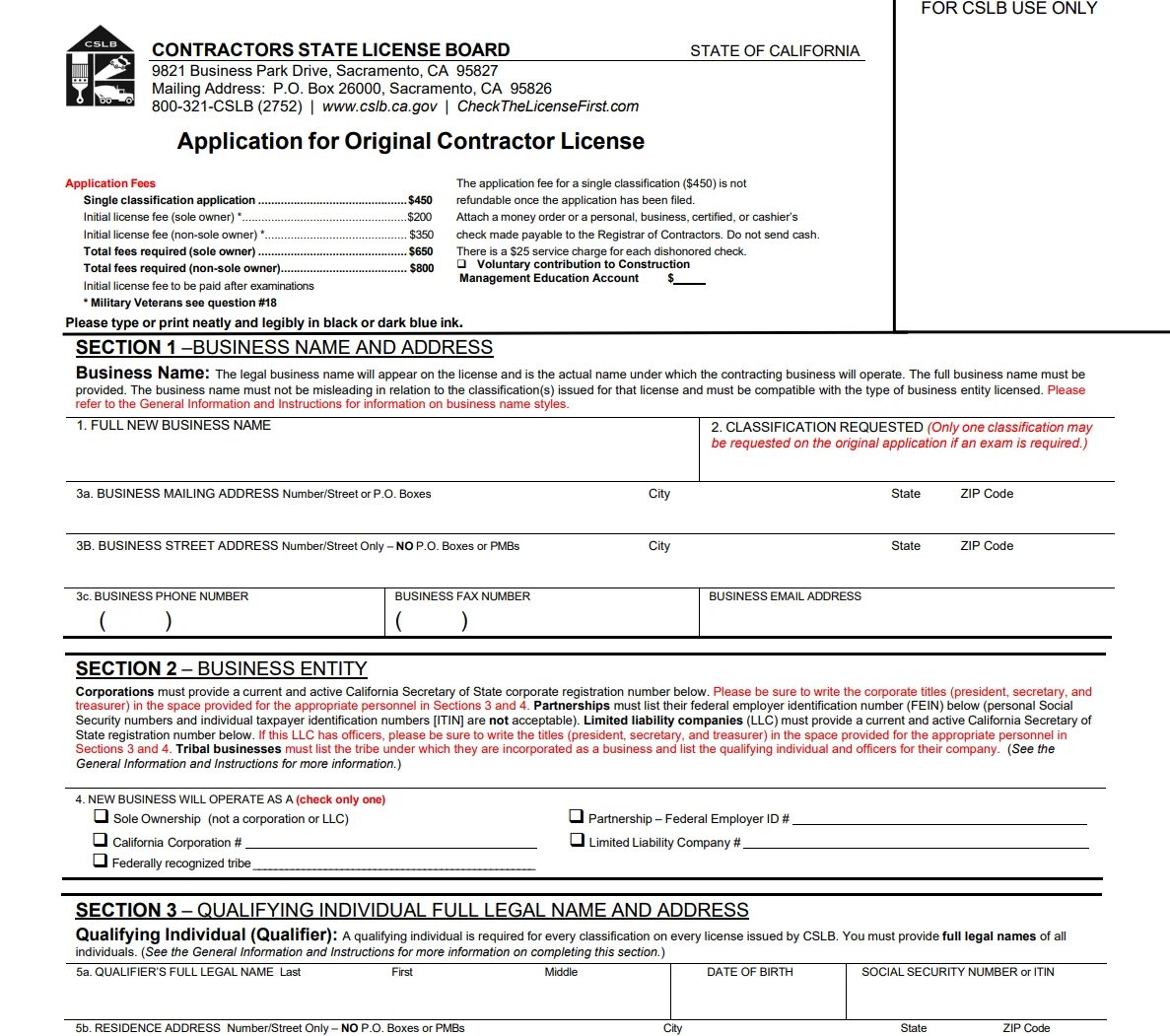
How to Get Your CSLB License in California
To become a licensed contractor in California, an applicant must first meet CSLB's basic eligibility requirements. The process begins with determining your eligibility and ends with providing the required bond and insurance proof before your license can be activated.
The "qualifying individual" is the person whose experience and exam scores the license is based on, and they must directly supervise construction operations performed under the license.
At Guidepost Insurance Services, we specialize in helping contractors secure the bonds and insurance they need to activate their CSLB license quickly and affordably.
License Requirements at a Glance
-
1Eligibility
18+ years old, 4+ years journey-level experience in your classification
-
2Application & Fees
Submit completed application with ~$450 non-refundable fee
-
3Fingerprinting & Background Check
Live Scan fingerprinting for DOJ/FBI background check
-
4Exams
Pass the Law & Business exam and your trade-specific exam
-
5Initial License Fee
~$200 sole owner / ~$350 for other entity types
-
6Bond & Insurance Proof
License won't be issued until bond and insurance are on file
Step-by-Step Licensing Process
Follow these steps to obtain your California contractor license through the CSLB.
Determine Eligibility
Be at least 18 years old and have at least 4 years of journey-level work experience within the last 10 years in the classification you're applying for. Classifications include Class A (General Engineering), Class B (General Building), or a Class C specialty trade. The "qualifying individual" is the person whose experience and exam scores the license is based on, and they must directly supervise construction operations performed under the license.
Complete the Application
Applications vary by business type — sole owner, partnership, corporation, or LLC — so choose the correct one for your entity. Ensure all sections are filled out accurately to avoid processing delays.
Submit Application & Pay Fees
Submit the completed application with the non-refundable application fee, currently around $450. Once CSLB accepts your application, you'll receive instructions for the next steps.
Complete Fingerprinting (Live Scan)
Once CSLB accepts the application, the qualifying individual must submit fingerprints for a DOJ/FBI background check. This is done through Live Scan fingerprinting at authorized locations throughout California.
Verify Work Experience (If Selected)
Some applicants are randomly selected to provide documentation confirming their claimed work experience. Be prepared to submit references, tax records, or other proof of your 4+ years of journey-level experience.
Schedule & Pass the Exams
Pass two exams through PSI testing centers:
-
Law and Business Exam — Covers California contracting law, business management, and safety regulations
-
Trade Exam — Specific to your classification (a few classifications, like C-61 Limited Specialty, waive this)
Pay the Initial License Fee
About $200 for a sole owner, $350 for other entity types. This fee must be paid before the license can be issued.
Provide Required Bond & Insurance Proof
Your license won't be issued or activated until this is on file. See the next section for detailed bond and insurance requirements.
Bonds & Insurance Needed to Activate the License
CSLB will not issue or activate a license number until the required bond and insurance items are on file. Here's what you need.
Contractor's License Bond
Required for all applicants (or an equivalent $25,000 cash deposit with CSLB). Protects consumers against incomplete or defective work and covers violations of licensing law.
LLC Employee/Worker Bond
Required in addition to the standard bond if the business is organized as an LLC. This provides additional protection for employees and workers.
Workers' Compensation Insurance
Required for any contractor with employees — no exceptions.
Sole owners with no employees may file a signed Certification of Exemption instead of carrying coverage.
Certain higher-risk classifications must carry workers' comp regardless of employee status: C-8 (Concrete), C-20 (HVAC), C-22 (Asbestos), C-39 (Roofing), and D-49 (Tree Service).
Coming in 2028
Under SB 216/SB 1455, California is phasing in a universal workers' comp requirement for all licensees, including exempt sole owners. Full implementation is set for January 1, 2028, after which the exemption option goes away entirely.
General Liability Insurance
Not a strict CSLB bonding requirement for most sole proprietors to activate a license.
Required: at least $1,000,000 in coverage under state law.
Most general contractors, developers, and municipalities won't hire or permit a contractor without proof of GL coverage (commonly $1–2 million).
Strongly recommended given California's 10-year liability exposure for construction defects — considered standard practice even where not strictly mandated.